Boho Floor Lamps: What Works and What the Style Gets Wrong

A boho floor lamp is doing two jobs at once, and most of them only do one. It has to be a piece of texture and character in the room, and it has to put light where you need it at the height you need it. Plenty of lamps sold under the boho label manage the first and fail the second badly.
This is a guide to what actually works in the style, what the label gets used to sell, and where the honest limits are. Full disclosure up front: we make carved gourd lamps and we do not make floor lamps. So this is not a pitch. It is what I would tell someone in the shop.
What makes a floor lamp boho rather than just tall
Bohemian style is a magpie aesthetic built out of handmade objects, natural material, layered pattern and warm low light. Applied to a floor lamp, that means three things in practice:
- Natural material in the shade or base — rattan, seagrass, jute, bamboo, wood, woven cotton, pierced metal.
- Texture that reads at a distance — the shade should do something to the light, not just contain it.
- Warm output — 2200K to 2700K. Cool white kills the style instantly regardless of what the lamp is made of.
What does not make a lamp boho: a beige shade, a tassel glued to a mass-produced base, or a listing that uses the word.
A useful test in a shop or on a listing: switch the lamp on in your head. If the light it gives would look the same through a plain white fabric shade, the lamp is only boho when it is off. The good ones change the light itself, with pattern, texture or a warmer tone than a standard shade gives.
The three types that actually work
Woven drum and cone shades
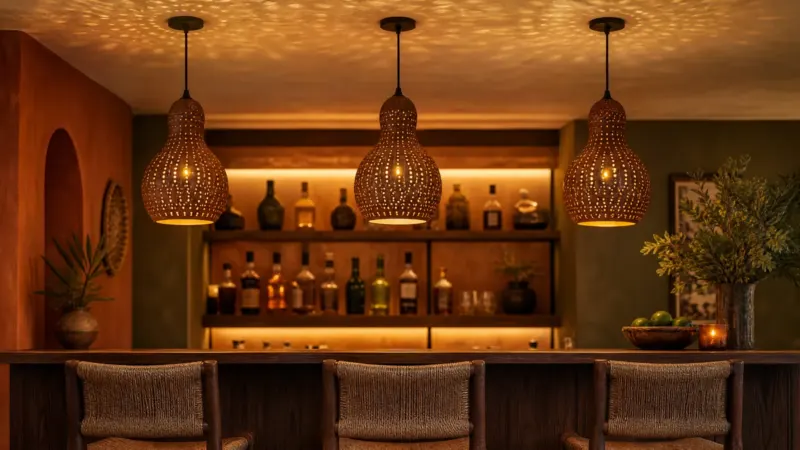
Rattan, seagrass or bamboo over a standard frame. The weave throws a soft dappled pattern on the ceiling and walls while still passing enough light downward to be useful. This is the most forgiving option and the easiest to live with.
Arc and tripod lamps in natural wood
Structure rather than shade does the work. A wooden tripod or a curved arc reaching over a sofa gives you real reading light with a silhouette that fits the style. These are the best choice if the lamp has to earn its place functionally.
Pierced and carved shades
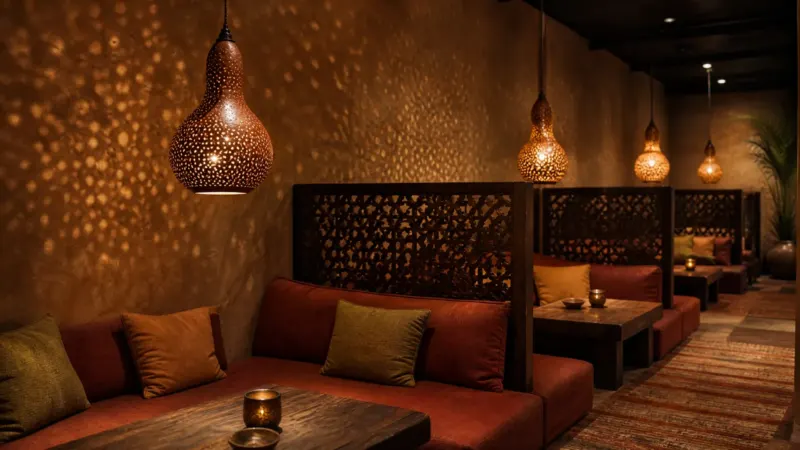
Metal, ceramic or carved organic shells. The most dramatic light pattern and the least usable light. Beautiful in a corner, useless next to a reading chair.
Two other types get sold under the boho label and deserve a caution. Paper lantern floor lamps look right and cost little, but the paper yellows and tears within a couple of years and they give no pattern at all. Macramé shades photograph beautifully and collect dust in every knot. Neither is a bad purchase if you know that going in. Neither is something I would call a long-term piece.
Comparing the three
| Woven shade | Wood tripod / arc | Pierced or carved | |
|---|---|---|---|
| Usable reading light | Moderate | Good | Poor |
| Pattern on walls | Soft dapple | Minimal | Strong |
| Typical price | $80–250 | $120–400 | $150–500 |
| Best position | Beside seating | Over a sofa or chair | Empty corner |
| Risk | Cheap weave sags | Can read mid-century, not boho | Ends up decorative only |
Opinion: if you only have space for one floor lamp, pick the wood tripod or arc and get your pattern from something smaller elsewhere in the room. Usable light is the harder thing to add later. A patterned table lamp or a pendant can supply the texture, but nothing supplies reading light except a lamp positioned for it.

Height, placement and the mistakes people make
For a reading position, the bottom of the shade wants to sit roughly at eye level when you are seated, about 140 to 150cm from the floor for most people. Higher and you get glare in your eyes. Lower and you light your lap and nothing else.
For an ambient corner piece, height matters less and you can go shorter, 120 to 140cm, letting it work as an object rather than a light source.
The most common mistake is buying one floor lamp and expecting it to light the whole room. It will not. Boho lighting is layered by definition: a floor lamp, a table lamp, something low, maybe a pendant. Three warm sources at low output beats one bright one, and that layering is more of the aesthetic than any single object.
The second most common mistake is a cool-white bulb. A $400 rattan lamp with a 4000K bulb looks like an office. An $80 one with a 2400K bulb looks expensive.
The other common mistake is scale. A slim tripod beside a deep three-seat sofa looks like an afterthought. As a rough rule, a floor lamp beside a sofa should be at least as tall as the sofa back plus the height of a seated person’s head, which lands most people between 150 and 165 cm overall. In a room with high ceilings, go taller or add a second source rather than stretching one lamp to do the whole corner.
Spotting mass-produced boho
The style sells, so a lot of factory output gets the label. Things that give it away: perfectly uniform weave with no variation, a shade that is actually printed fabric made to look woven, visible glue at the joins, and identical listing photos appearing across multiple shops.
Real handmade weave has variation in tension and colour. It is the same tell as with any craft object.
Weight is a quick test in a shop. Real rattan and solid wood tripods are heavier than they look, and a floor lamp that feels hollow and light usually has a thin metal pole with a printed or plastic wrap. Online, look for the base diameter in the specs. Anything under about 25 cm on a tall lamp tips easily, and cheap listings tend to leave that measurement out.
Also check the socket and cable. A heavy fabric cable and a solid switch on the cord are small signs that someone cared how the lamp would be used. A thin plastic cable with a flimsy rocker switch halfway along it usually tells you the budget went on the photo shoot.
What a boho floor lamp will not do
It will not light a room on its own. Plan on two or three sources.
A woven or pierced shade will not give you crisp task light for detailed work. If you sew, draw or do close work in that spot, put a dedicated task lamp there and use the boho piece for atmosphere.
And natural-fibre shades collect dust in a way smooth shades do not. A woven shade needs a brush or vacuum attachment every few months or it goes visibly grey.
It will not survive a household with a determined cat or a toddler unless the base is heavy. Tall lamps with woven shades are easy to pull over by the cord. If that is your house, a table lamp on a solid surface or a pendant is the safer way to get the look.
And it will not be the brightest light in the room, nor should it be. If the corner still feels dark with the lamp on, add a second low source nearby rather than swapping in a stronger bulb, which flattens the texture that made you buy the lamp in the first place.
Bulbs, honestly
Warm white LED, 2200K to 2700K, 6 to 10 watts for a floor lamp. Dimmable if the lamp supports it, which is worth the small premium in this style specifically, because the whole look depends on being able to run it low in the evening.
Avoid exposed cool-white bulbs. If the fixture leaves the bulb visible, use a filament-style warm LED rather than a bare modern one.
Making a table lamp do a floor lamp’s job
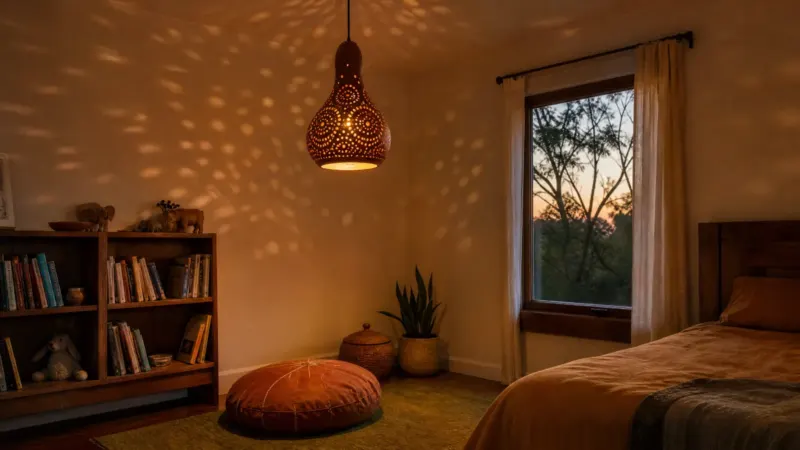
A full disclosure first: we do not make floor lamps. Carved gourd shells above about 40 cm are rare and fragile, and a tall pole puts the shell exactly where it gets knocked. What we see customers do instead is put a table lamp up high. A carved gourd lamp on a plant stand or a tall side table gives you the corner glow of a pierced floor lamp without the tipping risk.
The height maths is simple. A 70 cm (28 in) side table plus a 30 cm (12 in) lamp puts the light source at about a metre, which is the right height for ambient pattern on the wall behind it. A 90 cm plant stand pushes it to around 120 cm, close to where a floor lamp’s shade would sit. Choose a stand with a top at least 25 cm across so the wooden base sits fully on it. Our gourd table lamps fit that footprint.
If a true Turkish-style floor lamp is what you want, the Turkish floor lamp guide covers what is on the market and what it costs.
Cords, switches and safety
Floor lamps have one practical problem table lamps do not: a long run of cable across the floor. Route it along the wall or under the edge of a rug, never across a walkway. A foot switch on the cord is worth fitting if the lamp’s own switch sits high on the pole, because you will use a lamp more if it is easy to turn on. With any woven or carved shade, keep the bulb at least a few centimetres from the material and stick to LEDs, which stay cool enough that the shade does not discolour over time.
Frequently asked questions
What height should a boho floor lamp be?
About 140 to 150cm if you will read under it, so the shade bottom sits near seated eye level. 120 to 140cm is fine for a purely ambient corner piece.
What bulb makes a boho floor lamp look right?
A warm white LED at 2200K to 2700K. Colour temperature matters more to this style than the lamp itself. Cool white undoes the whole look.
Are rattan lamp shades a fire risk?
Not with LED bulbs, which run cool. Avoid incandescent and halogen in any natural-fibre shade, and stay within the maker’s stated wattage.
Can one floor lamp light a whole living room?
No, and in this style you would not want it to. Boho lighting is layered: two or three warm low sources rather than one bright one.
How do I clean a woven lamp shade?
Vacuum with a soft brush attachment, or dust with a dry paintbrush. Keep water off natural fibre.
Is boho the same as bohemian?
Same style, shorter word. Boho tends to be used for the contemporary, more restrained version; bohemian for the maximalist original.
Do you sell boho floor lamps?
No. We make carved gourd table lamps and pendant lights only. A gourd table lamp on a tall plant stand gives a similar corner glow, and it is much harder to knock over than a lamp on a pole.
Are rattan floor lamps safe with LED bulbs?
Yes. LEDs run cool enough that a woven shade will not scorch or discolour. Avoid incandescent and halogen bulbs in any natural-fibre shade, and keep the bulb clear of the weave.
Related reading
For the table-height version of the same decisions, see the boho table lamp guide. On telling handmade from factory output across the style, read how to tell real craft from a factory copy. If the carved-shade route interests you, how handmade gourd lamps are made covers what that material actually does with light, and the gourd table lamp guide covers placement. For the wider room picture, see living room lighting ideas.